
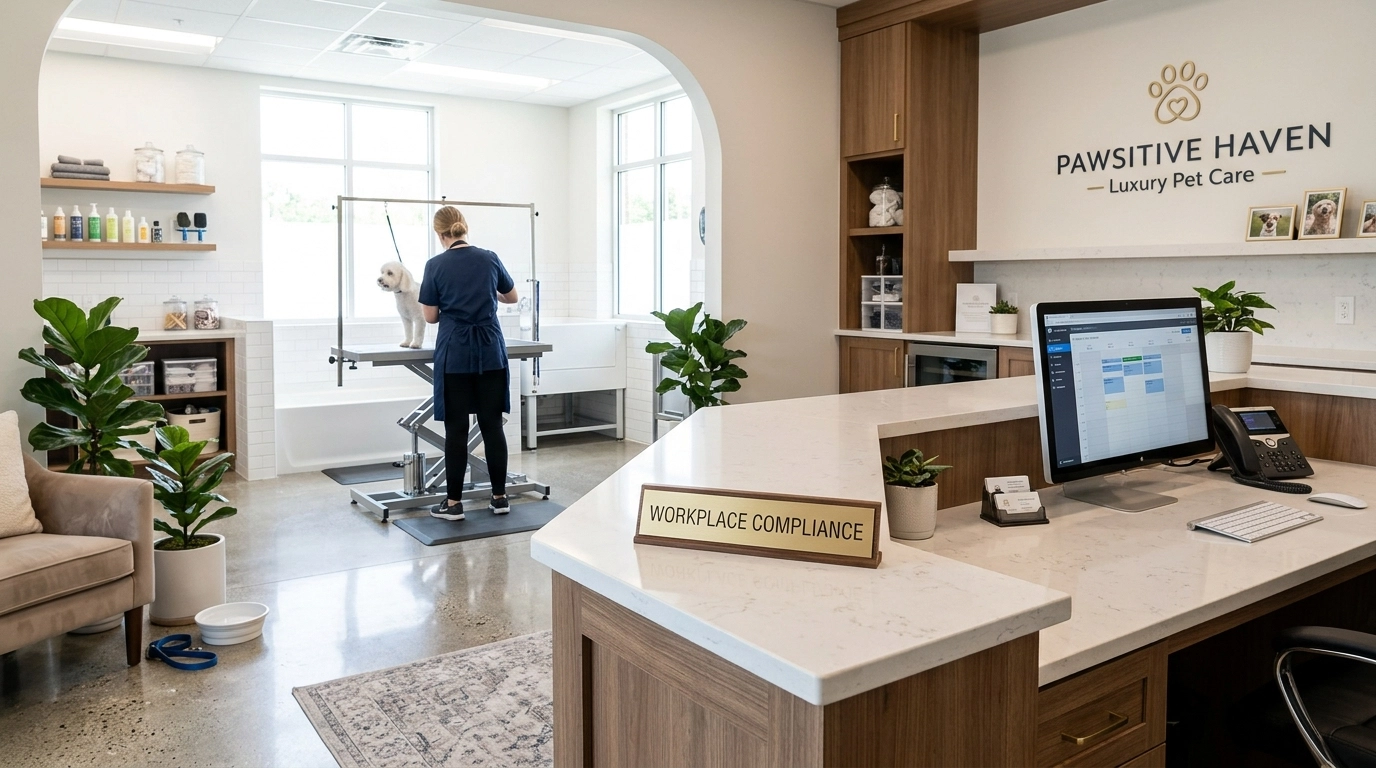
In the pet care industry, the prevailing culture often prioritizes the "family atmosphere." For many boutique grooming salons, boarding facilities, and doggy daycares, the transition from a five-person operation to a 30-employee enterprise happens incrementally. As the roster grows, the administrative focus remains on the animals and the clients, while human resources management is frequently relegated to an informal, "as-needed" basis.
However, the regulatory landscape of 2026 has rendered this informal approach a significant liability. The Department of Labor (DOL) and state-level regulatory bodies have intensified their scrutiny of small-to-mid-sized businesses, specifically targeting industries that traditionally rely on flexible staffing models. In the eyes of the law, "being a small team" is not a legal defense; it is often viewed as a red flag for non-compliance.
The Case of "Canine Comforts": A Study in Escalating Risk
To understand the tangible risks of HR negligence, consider the case of a mid-sized pet boarding and grooming business we will call Canine Comforts. The business employed 32 individuals across two locations. The owner, a dedicated professional with twenty years of experience in animal behavior, managed the team through verbal agreements and a skeletal employee handbook that had not been updated since 2018.
The business utilized six "independent contractor" groomers. These individuals worked fixed hours, utilized the company’s high-end shearing equipment, and followed the facility’s specific styling protocols. Because the owner considered them "partners" rather than employees, they were paid on a per-dog basis without tax withholdings or overtime compensation.
The failure began with a single interpersonal conflict. A long-term groomer, feeling slighted by a scheduling change, resigned and subsequently filed for unemployment benefits. Because the worker was classified as a 1099 contractor, the state’s workforce commission initially flagged the claim. This single administrative inquiry triggered a classification audit.
The regulatory investigation revealed that under the revised 2026 DOL standards, these groomers failed the "economic reality" test. The business exercised significant control over their work, and the groomers were economically dependent on the facility. Consequently, they were reclassified as employees.
The fallout was immediate and compounding:
- Unpaid Back Wages: The business was ordered to pay three years of unpaid overtime.
- Tax Liabilities: Unpaid FICA and unemployment taxes, plus interest and penalties, were levied by the IRS and the state.
- Liquidity Crisis: The total financial impact exceeded $185,000, forcing the owner to take out an emergency high-interest loan to avoid bankruptcy.
This case illustrates the "cause and effect" nature of HR compliance. A lack of proactive policy review led directly to a misclassification error, which, when coupled with a routine personnel conflict, resulted in a catastrophic financial event.
The 2026 Regulatory Climate for Pet Care
The pet care industry is currently operating under a heightened level of oversight. Regulatory updates in 2026 have streamlined the process for employees to report wage-and-hour violations. Furthermore, many states have implemented mandatory paid sick leave and expanded pay transparency requirements that apply to businesses with as few as 15 employees.
Many pet business owners mistakenly believe that their "small" status exempts them from the complexities of the Fair Labor Standards Act (FLSA) or state-specific employment statutes. This is an erroneous assumption. Regulatory bodies do not grant leniency based on the "niche" or "familial" nature of a business. If you have 25 to 50 employees, you are a prime target for audits because you are large enough to have significant liabilities but often small enough to lack a dedicated, professional HR department.
Common points of failure in the pet care sector include:
- Misclassification of Staff: Treating groomers or trainers as contractors to avoid payroll taxes.
- Off-the-Clock Work: Expecting staff to perform cleaning or equipment maintenance before or after their scheduled shifts without pay.
- Inadequate Record-Keeping: Failing to maintain precise personnel records and signed handbook acknowledgments.
- Vague Disciplinary Policies: Terminating an employee for "poor fit" without a documented history of performance coaching, leading to wrongful termination claims.
Transitioning from Reactive to Proactive: Protecting Your Investment
If the narrative of Canine Comforts resonates with your current operations, you are likely operating with significant "compliance blind spots." The transition from a state of vulnerability to a state of security requires a shift in management philosophy. You must move away from the "hope-based" strategy and adopt a professional HR framework.
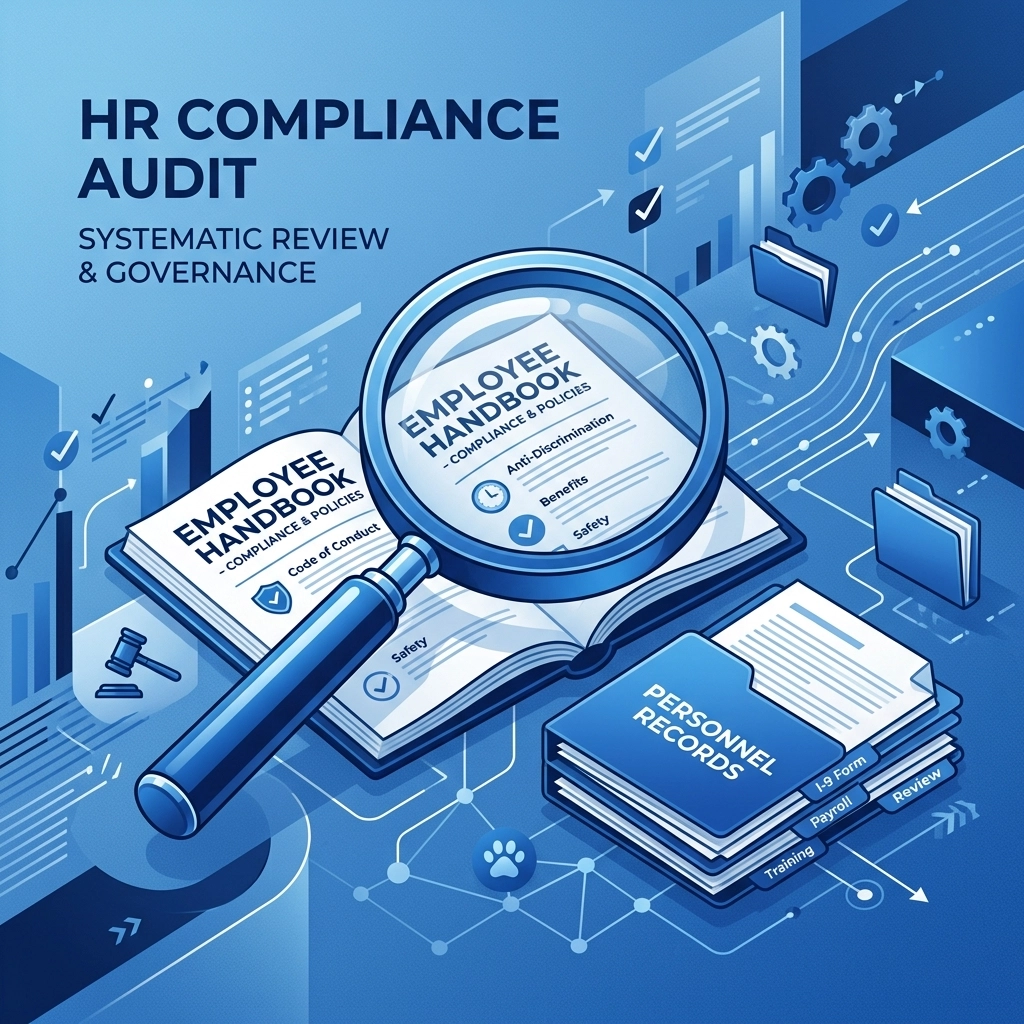
At Workplace Investigators LLC, we provide the specialized oversight necessary to navigate these risks. We understand that as a pet business owner, your expertise is in animal care, not employment law. Our services are designed to bridge that gap without the overhead of a full-time executive HR team.
1. The HR Health Check
Your first line of defense is an HR Health Check. This is not a superficial review; it is a forensic examination of your HR processes. We adopt the perspective of a plaintiff’s attorney. We review your employee handbook, your personnel records, and give you the tools to help you classify your employees so that a disgruntled employee doesn't exploit it. Our goal is to rectify these issues before they escalate into legal complications.
2. Fractional HR Services
For businesses scaling between 25 and 50 employees, the need for guidance is constant but may not justify a six-figure salary for a full-time HR Director. Our Fractional Services provide you with access to employment law experts who can handle everything from 1:1 employee engagement to the creation of customized, legally compliant documentation. This ensures that every meeting, disciplinary action, and hire is handled with professional precision.
3. Neutral Workplace Investigations
When a conflict arises, whether it is a claim of harassment, discrimination, or wage theft: the neutrality of the investigation is paramount. If you, as the owner, handle the investigation yourself, you risk being viewed as a biased party in a courtroom. Our Workplace Investigation service provides a neutral third party to conduct witness inquiries and documentation, ensuring the process is fair, compliant, and defensible in a legal setting.
The Moral of the Story: Proactive Compliance is an Asset
The cost of a proactive HR strategy is a fraction of the cost of a single employment lawsuit. In the pet care industry, your reputation is your most valuable asset. A public legal battle or a DOL investigation can damage your brand beyond repair, alienating both employees and clients.
The moral is clear: regulatory compliance is not an "add-on" for when you become a "large" corporation; it is a fundamental requirement for any business that employs people. By conducting a thorough health check of your policies and establishing a formal HR strategy now, you transform your human resources from a liability into a stable foundation for growth.

Secure Your Business Today
The 2026 labor market waits for no one. Do not wait for a formal complaint to realize your business is at risk. Workplace Investigators LLC is prepared to provide the professional, objective guidance you need to safeguard your operations.
Take the first step toward total compliance.
Contact Workplace Investigators LLC today to schedule your initial consultation. We will provide a clear timeline for your HR Health Check and ensure your business is protected against the escalating risks of the current legal environment.
Call us today at (602) 609-8554 or visit wpihr.com to secure your team’s future.